
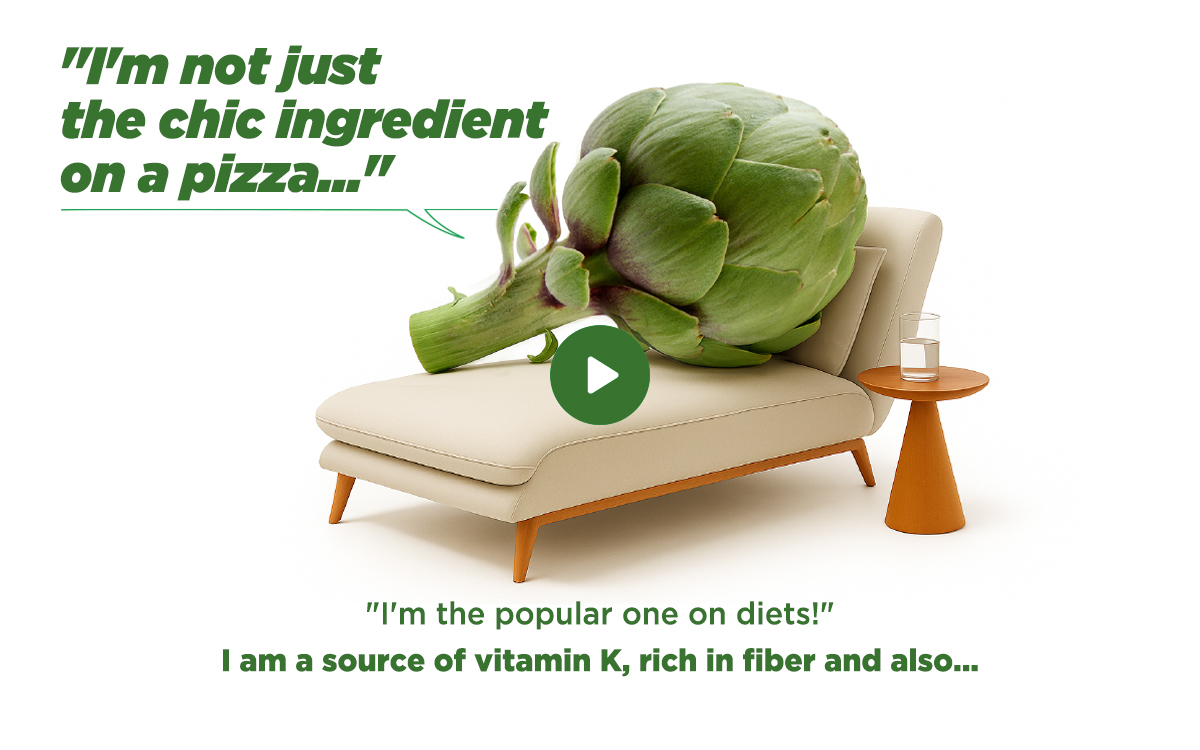
Artichoke is low in calories (44 kcal per 100 g) and rich in dietary fiber, especially inulin, which promotes intestinal health and regulates blood glucose. It stands out for its potassium (430 mg per 100 g) and phosphorus (130 mg per 100 g) content, essential for the nervous system, muscles, bones and teeth.
It contains vitamin C, which protects cells from oxidative damage, and vitamin B9 (folic acid), important for the formation of blood cells and relevant during pregnancy. It is a source of cynarin, which stimulates bile secretion, promoting fat digestion and liver health.
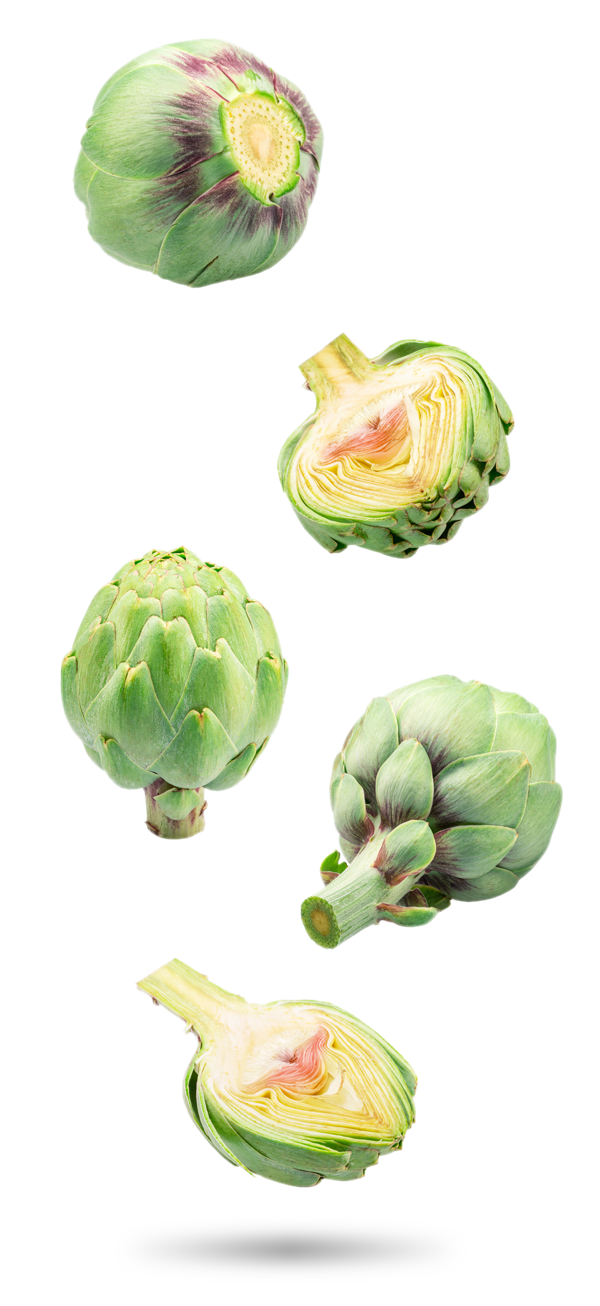
Artichokes can be enjoyed cooked, steamed, grilled, roasted or even raw, and they combine well with a multitude of ingredients such as rice, legumes, fish or extra virgin olive oil. They are very versatile in the kitchen. To choose a good artichoke, look for compact pieces, with firm and green leaves, without dark spots or dry stem. If it crackles when you squeeze it, it’s fresh.
To prepare them, remove the tough outer leaves and cut off the tips. Soak them in water with lemon or parsley to prevent oxidation before cooking.Canned or frozen versions are a good alternative all year round.
Cinarina
An acidic substance with a choleretic effect, that is, with the ability to increase bile secretion, which can intervene in processes such as the accumulation of fat in the liver, the formation of stones in the gallbladder or the formation of cholesterol, in addition to promoting the elimination of urine.
Sterols
With the ability to limit cholesterol absorption.
Fiber
Of which it has a high content, and which helps regulate the functioning of the intestine.
Thiamine
That contributes to the normal functioning of the heart, nervous system or psychological function.
Season: All year round, depending on the variety.
